
Choosing the right patchwork quilting ruler is not just about picking a size that “looks right.”
In quilting and sewing, ruler size directly affects how accurately and efficiently you cut fabric. A ruler that is too short can limit your movement, while one that is too long can feel difficult to control.
When combined with a metal cutting edge, the right ruler size becomes even more important. It determines how smoothly your rotary cutter moves and how consistent your cuts will be across an entire project.
What Is a Patchwork Quilting Ruler with Metal Cutting Edge?

A patchwork quilting ruler with metal cutting edge is designed to guide rotary cutting while protecting the ruler itself.
Unlike standard acrylic rulers, this type includes a reinforced metal strip along one side. This allows the rotary cutter to glide along a stable edge without damaging the ruler over time.
At the same time, the transparent acrylic body makes it easy to see fabric alignment and markings, while angle guides help position pieces accurately.
This combination makes it a practical tool for both beginners and experienced quilters.
Why Size Matters More Than You Think
Many beginners assume that any quilting ruler can handle all tasks. In reality, size plays a critical role in both precision and workflow.
A smaller ruler offers better control, especially for detailed work. However, it may require multiple repositioning when cutting longer strips.
A longer ruler provides stability over extended cuts, but it can feel less manageable when working on smaller fabric pieces.
Choosing the right size is about matching the ruler to your typical tasks, not just your workspace.
Understanding Metric vs Inch Rulers


Before selecting a size, it is important to decide whether you need a metric or inch-based ruler.
Metric rulers are commonly used in Europe and many parts of Asia, where measurements are based on centimeters.
Inch rulers are widely used in quilting communities, especially in the United States, where patterns are often designed in inches.
The key is consistency. Mixing measurement systems can lead to errors, so it is best to stick with one system throughout your project.
Choosing the Right Size for Your Projects
Small Rulers for Detail Work


Smaller rulers are ideal when precision and control matter most.
They are especially useful for trimming small fabric pieces, adjusting seams, or working on detailed patchwork patterns. Because they are compact, they are easier to handle and reposition quickly.
For example, a 20cm ruler or a 12-inch narrow ruler works well for these situations. The added metal edge ensures that even short cuts remain clean and accurate.
Medium Rulers for Everyday Quilting
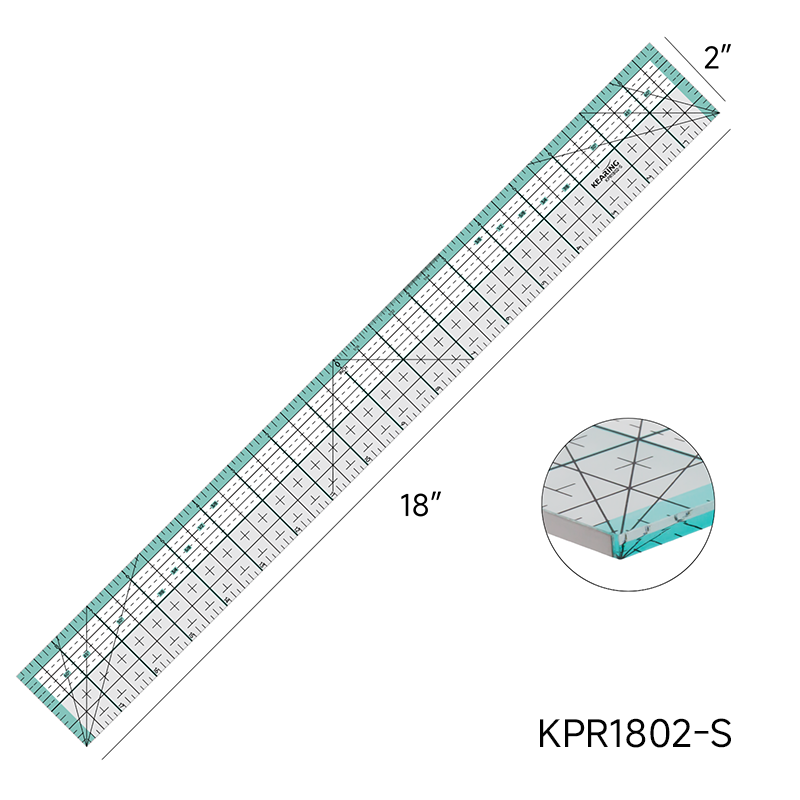

Medium-sized rulers are often the most versatile option.
They provide enough length for cutting standard fabric pieces while still being easy to control. This makes them a good choice for most quilting tasks, especially if you are working on a variety of patterns.
A 30cm ruler or an 18-inch ruler typically falls into this category. These sizes offer a balance between precision and efficiency, making them suitable for both beginners and regular users.
Long Rulers for Cutting Fabric Strips


Long rulers are designed for cutting extended lines in a single movement.
They are particularly useful when working with large fabric pieces or preparing strips for quilting. Because the ruler covers a greater distance, it reduces the need for repositioning and helps maintain straight cuts.
Sizes such as 60cm or 24 inches are ideal for this purpose. When combined with a metal cutting edge, they provide a stable guide for long, continuous cuts.
How Metal Edge Improves Cutting Across All Sizes
Regardless of size, the metal edge plays a key role in performance.
A reinforced edge prevents the rotary cutter from damaging the ruler, which helps maintain accuracy over time. It also creates a smoother cutting path, especially when applying consistent pressure.
This means that whether you are using a small ruler for detail work or a long ruler for strips, the cutting experience remains stable and reliable.
If you want to understand this advantage in more detail, you can read our guide on why quilting rulers with metal edge cut better.
Practical Tip: Build a Small Set Instead of One Ruler

Instead of relying on a single ruler for all tasks, many quilters prefer to use a small set of different sizes.
A practical combination might include:
- one small ruler for detailed work
- one medium ruler for everyday use
- one long ruler for cutting strips
This approach allows you to work more efficiently without forcing one tool to handle every situation.
Reliable Tools for Quilting and Sewing
A quilting ruler is used in nearly every step of fabric preparation, so choosing the right one matters.
Kearing patchwork quilting rulers are designed with:
- durable 3mm acrylic construction
- clear black and blue markings
- stainless steel cutting edge for precision
Available in both metric and inch sizes, these rulers support a wide range of quilting and sewing applications.
You can explore the full range in the patchwork quilting ruler collection to find the sizes that best match your workflow.
Conclusion
Choosing the right patchwork quilting ruler is about more than just size. It is about how that size fits your cutting style and project needs
Smaller rulers offer control, medium rulers provide versatility, and longer rulers improve efficiency for extended cuts.
When combined with a metal cutting edge, each size becomes more reliable and durable, helping you achieve consistent results across every project.
FAQ
What size quilting ruler should I use?
The best size depends on your project. Smaller rulers are ideal for detailed work, while longer rulers are better for cutting strips. Medium sizes offer the most versatility for general quilting.
Is a metal edge quilting ruler better?
Yes. A metal edge protects the ruler from damage and provides a stable guide for rotary cutting, resulting in cleaner and more accurate cuts.
Metric or inch quilting ruler — which should I choose?
Choose the system that matches your patterns. Quilting patterns in the US typically use inches, while metric is more common in other regions.
Can one quilting ruler handle all tasks?
While possible, it is not ideal. Using a combination of small, medium, and long rulers improves efficiency and accuracy.


